
A Legacy Looking to the Future
Christian Pegoraro
As I gaze at the frieze of the 17th-century Palazzo Baccin in Nove, my mind inevitably drifts to the past, reflecting on how the work that Botteganove carries forward today is the result of a tradition that passionately renews itself. This frieze, created between 1922 and 1923 by the renowned ceramicist Teodoro “Doro” Sebellin, stands as one of the most significant testimonies of Nove’s fine ceramic craftsmanship. It is not merely a decorative element but a work conceived and executed with vision: each individual piece was shaped and painted by hand, following an approach far removed from mass production.
This underscores how Nove’s ceramics have always been a space for experimentation, where tradition and innovation merge. At the time, this frieze served as the calling card of the Zanolli-Sebellin- Zarpellon manufactory, also known as the “fabbrica dei tosi” (factory of the young men), a workshop that, like many others in the district, engaged artists and talented designers to transform ceramic production into a true expression of research and experimentation.
Nove’s ceramics have always thrived on innovation and the exchange of knowledge. It is no coincidence that Doro Sebellin also contributed to the creation of the renowned ceramic façade of the Grand Hotel Ausonia & Hungaria at the Lido of Venice, a Liberty masterpiece crafted between 1913 and 1916 under the guidance of sculptor and ceramicist Luigi Fabris. This extraordinary architectural decoration stands as one of the finest moments in the culture of design applied to ceramics—a perfect balance of exceptional craftsmanship, design, and art.
The dialogue between design and craftsmanship, between idea and material, between past and future is what still defines Botteganove’s work today. It is not merely about preserving a tradition but evolving it, with the awareness that the value of ceramics lies not only in their beauty but in the thought that generates them, the hands that shape them, and the ability to create objects that are an expression of their time yet timeless.
Thus, the ornamental detail of the frieze, which I observe every day, becomes a symbol of belonging to a community, to a district in constant evolution. It is proof that tradition, when projected into modernity, is not something distant but an eternal present.
The Ceramic Tradition of Nove: Art, Innovation and History
Nadir Stringa
In the field of decorative arts, Nove is renowned worldwide for its ceramics, which have been continuously produced for three centuries—not only majolica (since 1727) but also porcelain (since 1762), English-style earthenware (since 1783), and stoneware (since the mid-20th century).
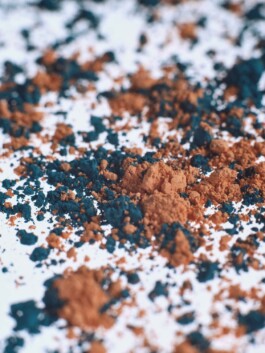
Nove is a small town, nestled along the Brenta River at the foothills of the Vicentine Prealps, in an exceptionally favorable area. This region is characterized by the presence of rich deposits of plastic clay, kaolin, and silica sand in the surrounding hills; the proximity to the riverbed, abundant with calcium carbonate and aquartz pebbles; a once-navigable river—until the late 19th century—essential for transporting fragile finished products to Venice and for floating timber from the nearby Valsugana forests to Nove; and access to hydraulic power and grinding mills for producing ceramic bodies, tin-glazes, lead-glazes, and pigments.
Visionary entrepreneurs, starting with the Antonibon family and followed by the Baccin, Baroni, Toffanin, Cecchetto, Viero, Tommasi, Agostinelli, Dal Prà, Zen, Barettoni, and others, together with skilled local and foreign artisans, initiated and developed high- quality ceramic production. Their constant innovation in shapes and painted decorations set new standards that inspired many other ceramic districts.
By the early 19th century, collectors and antique dealers—especially foreigners—were already seeking out 18th-century ceramics from Nove. Over time, these pieces have enriched the collections of numerous museums in Italy and abroad, including the British Museum and the Victoria & Albert Museum in London, as well as museums in Cambridge, Hamburg, Cologne, Brussels, Vienna, Warsaw, Sèvres, Grenoble, Dijon, Strasbourg, Prague, New York, Vancouver, Melbourne, and Tokyo.
The fundamental reasons behind the appreciation and recognition of Nove’s ceramic production by such esteemed institutions lie not only in the elegance of its forms, the variety and refinement of its decorations, the wide chromatic range achieved at high temperatures, and the brilliance and softness of its glazes. More importantly, they stem from a continuous pursuit of innovation and a keen ability to adapt to evolving tastes—qualities that remain essential to this day.

Chiara Andreatti
A designer born in Veneto, she lives and works between Asolo and Milan. After studying industrial design at the IED and attending a master’s programme at the Domus Academy, she collaborated with prominent designers such as Raffaella Mangiarotti and Renato Montagner. For over ten years, she worked for Lissoni Associati studio. She designs for major Italian and international companies. In 2017, she was the artistic director of Botteganove.
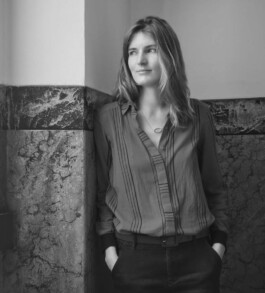
Chiara Andreatti
A designer born in Veneto, she lives and works between Asolo and Milan. After studying industrial design at the IED and attending a master’s programme at the Domus Academy, she collaborated with prominent designers such as Raffaella Mangiarotti and Renato Montagner. For over ten years, she worked for Lissoni Associati studio. She designs for major Italian and international companies. In 2017, she was the artistic director of Botteganove.
Studiopepe
A Milan-based agency specializing in design, architecture, and creative direction, founded in 2006 by Arianna Lelli Mami and Chiara Di Pinto. Studiopepe’s philosophy is based on a conceptual and multidisciplinary approach to design, resulting in a layered and eclectic language, rich in references yet simultaneously rigorous and highly iconic. Recurring themes in Studiopepe’s projects, which range from product design to interior design, include art,
the study of formal archetypes, and experiments with materials.
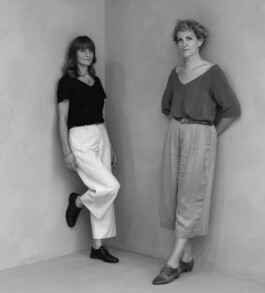
Studiopepe
A Milan-based agency specializing in design, architecture, and creative direction, founded in 2006 by Arianna Lelli Mami and Chiara Di Pinto. Studiopepe’s philosophy is based on a conceptual and multidisciplinary approach to design, resulting in a layered and eclectic language, rich in references yet simultaneously rigorous and highly iconic. Recurring themes in Studiopepe’s projects, which range from product design to interior design, include art,
the study of formal archetypes, and experiments with materials.
Cristina Celestino
Born in Pordenone, she lives in Milan, where she founded her studio in 2013 and the brand Attico Design. A graduate in architecture, she focuses on interior architecture and design, and today she designs exclusive projects for both private clients and companies. Her approach to design combines an innate freedom of observation—cultured, curious, and playful—with a strong ability for scientific and design research to create unexpected spaces, objects, and experiences. Cristina Celestino led the creative direction of Botteganove in 2016.
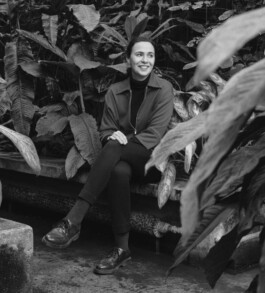
Cristina Celestino
Born in Pordenone, she lives in Milan, where she founded her studio in 2013 and the brand Attico Design. A graduate in architecture, she focuses on interior architecture and design, and today she designs exclusive projects for both private clients and companies. Her approach to design combines an innate freedom of observation—cultured, curious, and playful—with a strong ability for scientific and design research to create unexpected spaces, objects, and experiences. Cristina Celestino led the creative direction of Botteganove in 2016.
Adam Nathaniel Furman
A London-based artist and designer, with Japanese and Argentine roots. Trained in architecture and fine arts, he is known worldwide for his engaging and provocative interior projects and for his colorful, fun products created with major international brands. Furman believes in design that evokes joy: for this reason, his work also includes public art, towering, colorful sculptures that can be enjoyed and experienced by everyone. His work has been exhibited worldwide and widely published.

Adam Nathaniel Furman
A London-based artist and designer, with Japanese and Argentine roots. Trained in architecture and fine arts, he is known worldwide for his engaging and provocative interior projects and for his colorful, fun products created with major international brands. Furman believes in design that evokes joy: for this reason, his work also includes public art, towering, colorful sculptures that can be enjoyed and experienced by everyone. His work has been exhibited worldwide and widely published.
Botteganove Studio
Internal research and design team, is led by Christian Pegoraro, founder of Botteganove and a craftsman-entrepreneur. Faithful to the historic ceramic tradition of Nove, Christian continuously pursues research and experimentation. Growing up in the heart of ceramics, in 2013 he took the reins of the family business with the ambitious goal of restoring the nobility of ceramics, creating innovative collections through the use of refined clays and glazes.
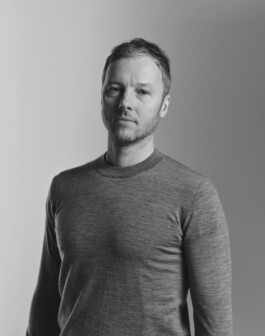
Botteganove Studio
Internal research and design team, is led by Christian Pegoraro, founder of Botteganove and a craftsman-entrepreneur. Faithful to the historic ceramic tradition of Nove, Christian continuously pursues research and experimentation. Growing up in the heart of ceramics, in 2013 he took the reins of the family business with the ambitious goal of restoring the nobility of ceramics, creating innovative collections through the use of refined clays and glazes.
Zanellato/Bortotto
The studio works in product design, limited editions, artistic direction, and interior design, collaborating with both Italian and international companies.
In 2024, they received the Designers of the Year award from “Elle Decor Italia” at the Edida Awards. In 2023, they won the competition for the refurbishment of Villa Medici in Rome, and in 2022, they curated the “Tracing Venice” exhibition for Homo Faber.
The studio oversees the artistic direction of Botteganove.
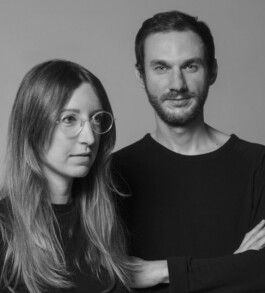
Zanellato/Bortotto
The studio works in product design, limited editions, artistic direction, and interior design, collaborating with both Italian and international companies.
In 2024, they received the Designers of the Year award from “Elle Decor Italia” at the Edida Awards. In 2023, they won the competition for the refurbishment of Villa Medici in Rome, and in 2022, they curated the “Tracing Venice” exhibition for Homo Faber.
The studio oversees the artistic direction of Botteganove.
Angelo Spagnolo
Artist and designer from Marostica, Angelo Spagnolo is an important name in the world of ceramics. He was a teacher of plastic arts at the Istituto Statale d’Arte of Nove and a collaborator of some of the most innovative companies in the Vicenza area. Nature and geometry have always been the cornerstones of his research, inspired by natural clays and earth colors. Along with his artistic talent, Spagnolo combines the skill of a technician capable of experimenting with materials and finding innovative solutions.

Angelo Spagnolo
Artist and designer from Marostica, Angelo Spagnolo is an important name in the world of ceramics. He was a teacher of plastic arts at the Istituto Statale d’Arte of Nove and a collaborator of some of the most innovative companies in the Vicenza area. Nature and geometry have always been the cornerstones of his research, inspired by natural clays and earth colors. Along with his artistic talent, Spagnolo combines the skill of a technician capable of experimenting with materials and finding innovative solutions.

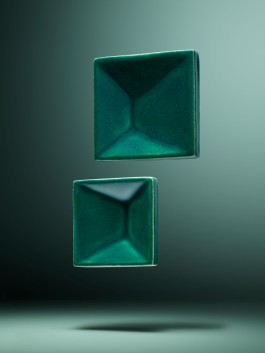
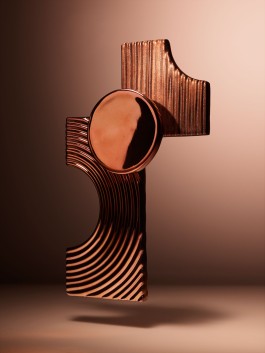
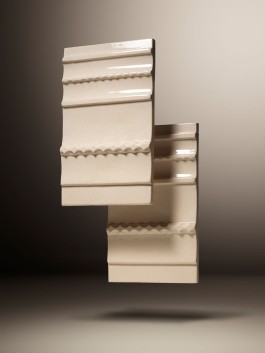
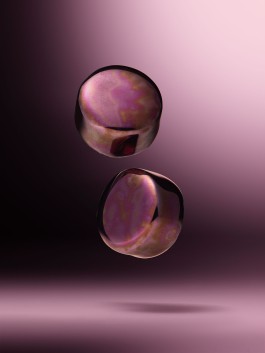
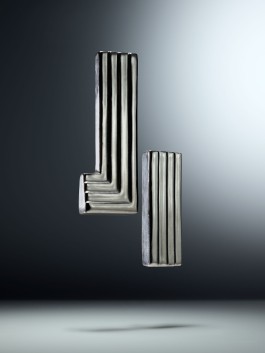
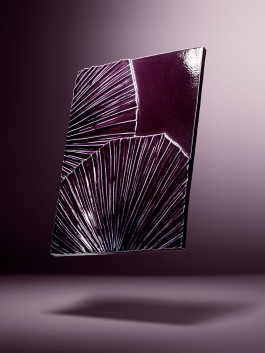
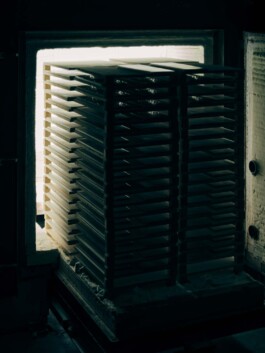
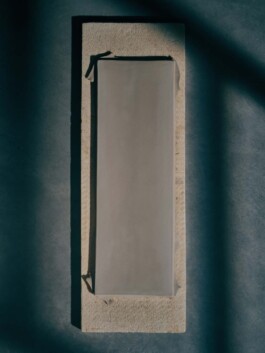
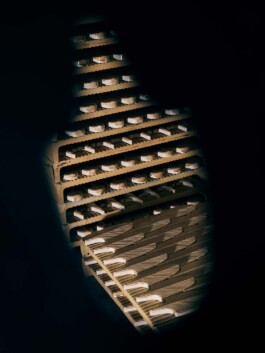
Thinking of Botteganove means imagining intricate tile compositions, coming together to create vast ceramic surfaces, unique in their precious reflections and complex three-dimensionality. Yet, it is only through a deeper gaze that one can truly see what makes these surfaces so special—perceiving the distinctive details that define each individual element. Every tile encapsulates a series of meticulously combined processes, blending craftsmanship and experimentation.
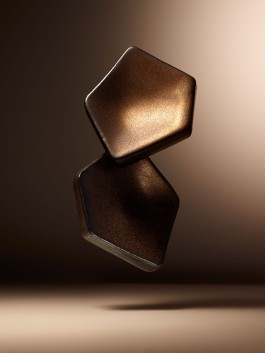
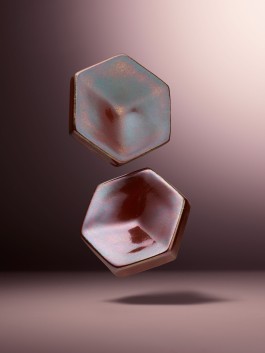
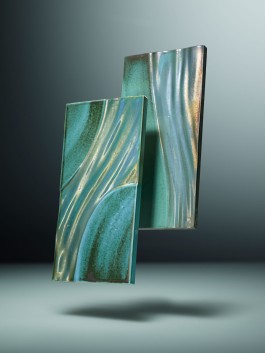
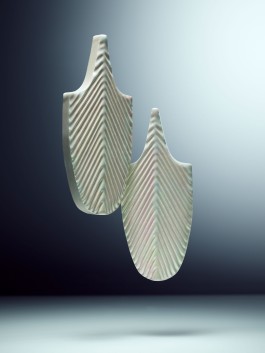
These are the qualities that have led us to view and conceive each piece in our collections as a jewel. We entrusted this interpretation to the keen and decisive eye of Vincent Levrat, who photographed the twelve families in the Botteganove catalog, capturing finishes, glazes, and three-dimensionality with elegance and extraordinary precision. The result is a series of images where the tile is not merely seen as part of a whole but as something distinct in itself—like a jewel. Unique, refined, and original photographs, where sharp details shine with brilliance, as precious as gold.
Download the catalogue